Next Up:
October 1st 3:30-5pm: Book Talk with Silvia Danielak on Peace Infrastructures: How UN Peace Operations Build Roads, Bridges, and Solar Farms in the Pursuit of Sustainability
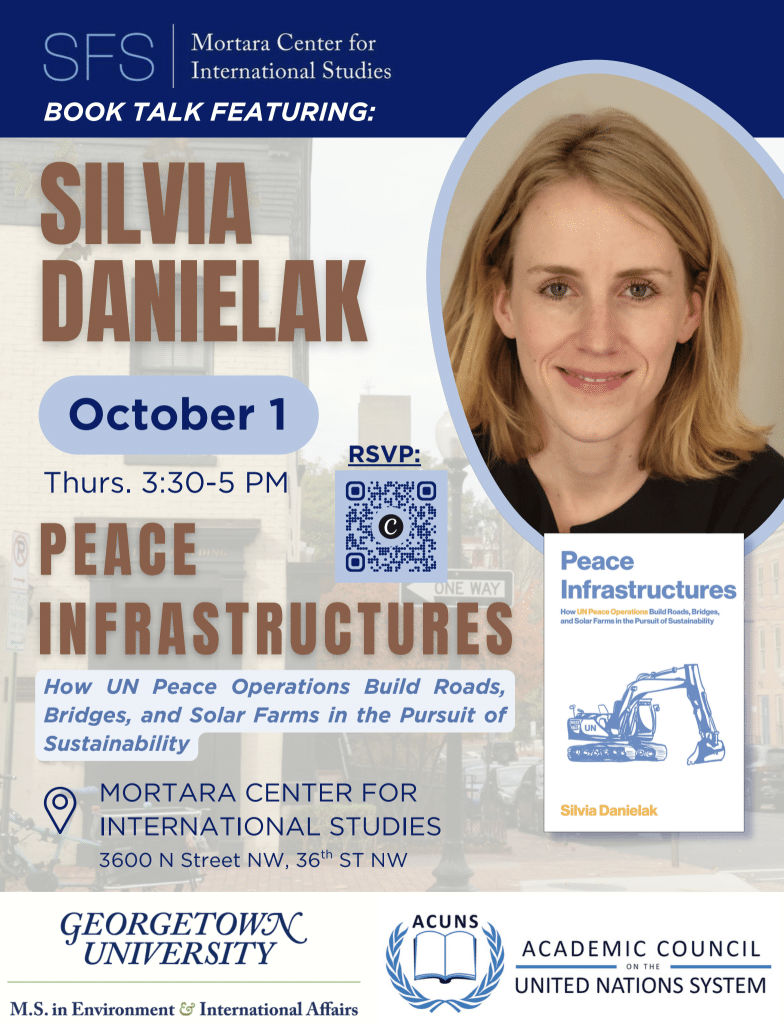
Peace Infrastructures examines how United Nations peace operations build, finance, and govern infrastructure in conflict-affected settings. Through roads, bridges, energy systems, and other forms of public infrastructure, peace operations increasingly shape the material foundations of everyday life. The book explores how these projects are connected to broader goals of peacebuilding, sustainability, resilience, and statebuilding. Drawing on extensive research, it shows how infrastructure has become an important—yet often overlooked—tool of international intervention. Rather than treating infrastructure as a purely technical matter, Peace Infrastructures highlights its political, social, and environmental dimensions and asks what role infrastructure should play in building more peaceful and sustainable futures.
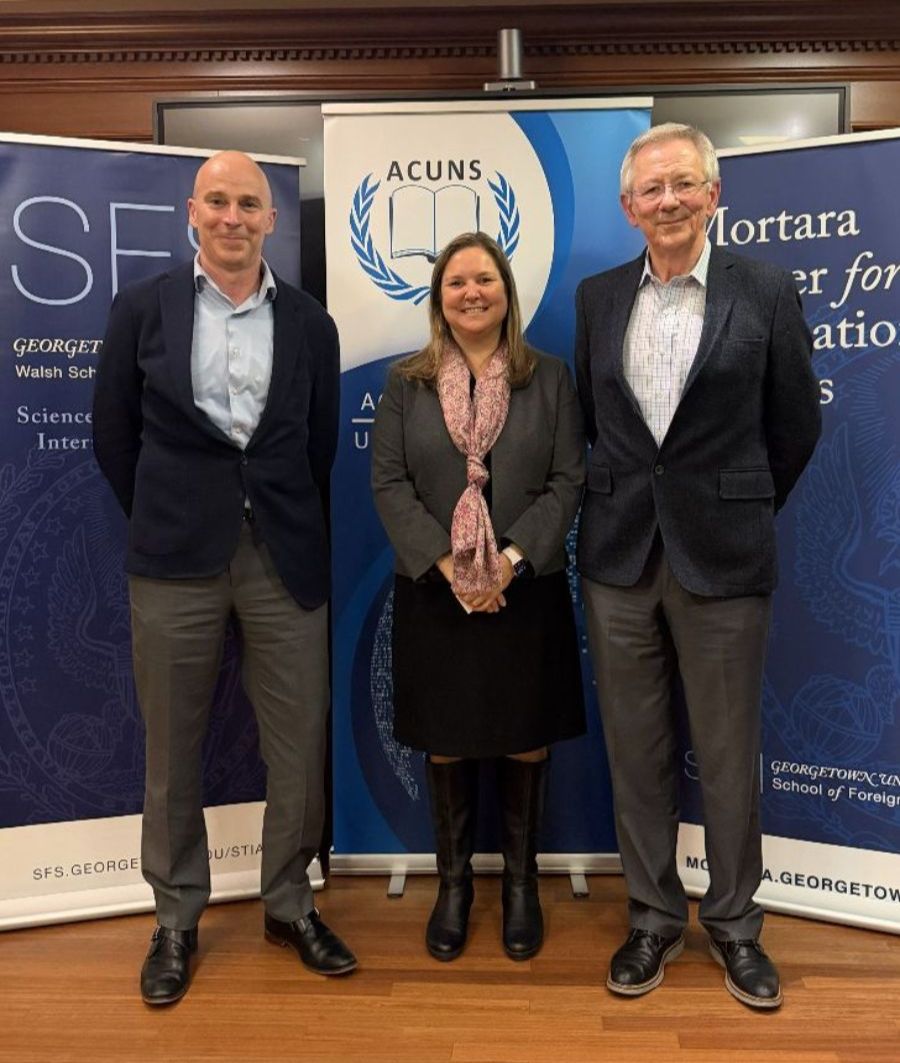
Join us as George Mason University Carter School for Peace and Conflict Resolution faculty member and former postdoctoral fellow at Georgetown’s Earth Commons Institute for Environment and Sustainability discusses her newly released book and the importance of considering infrastructure when examining peacebuilding. The event is cohosted by ACUNS and the Masters of Science in Environment and International Affairs department at Georgetown University.
Previous Events – 2026
The Stimson Center and the Academic Council on the United Nations System (ACUNS) were pleased to co-host a fireside chat featuring María Fernanda Espinosa, President of the 73rd session of the United Nations General Assembly, former Foreign and Defense Minister of Ecuador, and a candidate to serve as the 10th United Nations Secretary-General from January 1, 2027. In this moderated discussion, Ms. Espinosa shared her vision for the United Nations, including her perspective on the future of multilateral cooperation and global leadership.
Speakers:
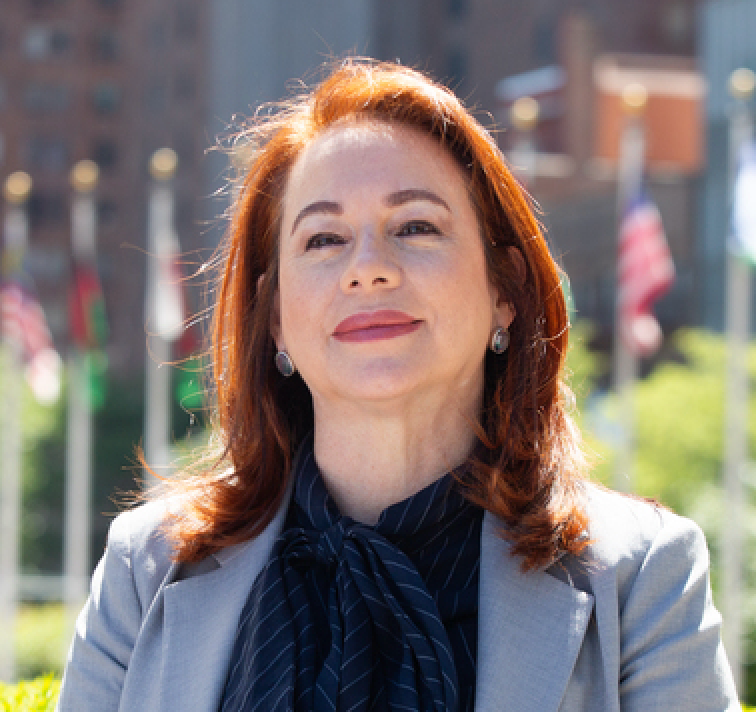
María Fernanda Espinosa
President of the 73rd session of the United Nations General Assembly, former Foreign and Defense Minister of Ecuador
Moderators:

Dr. Sandra Tombe
Executive Director of ACUNS
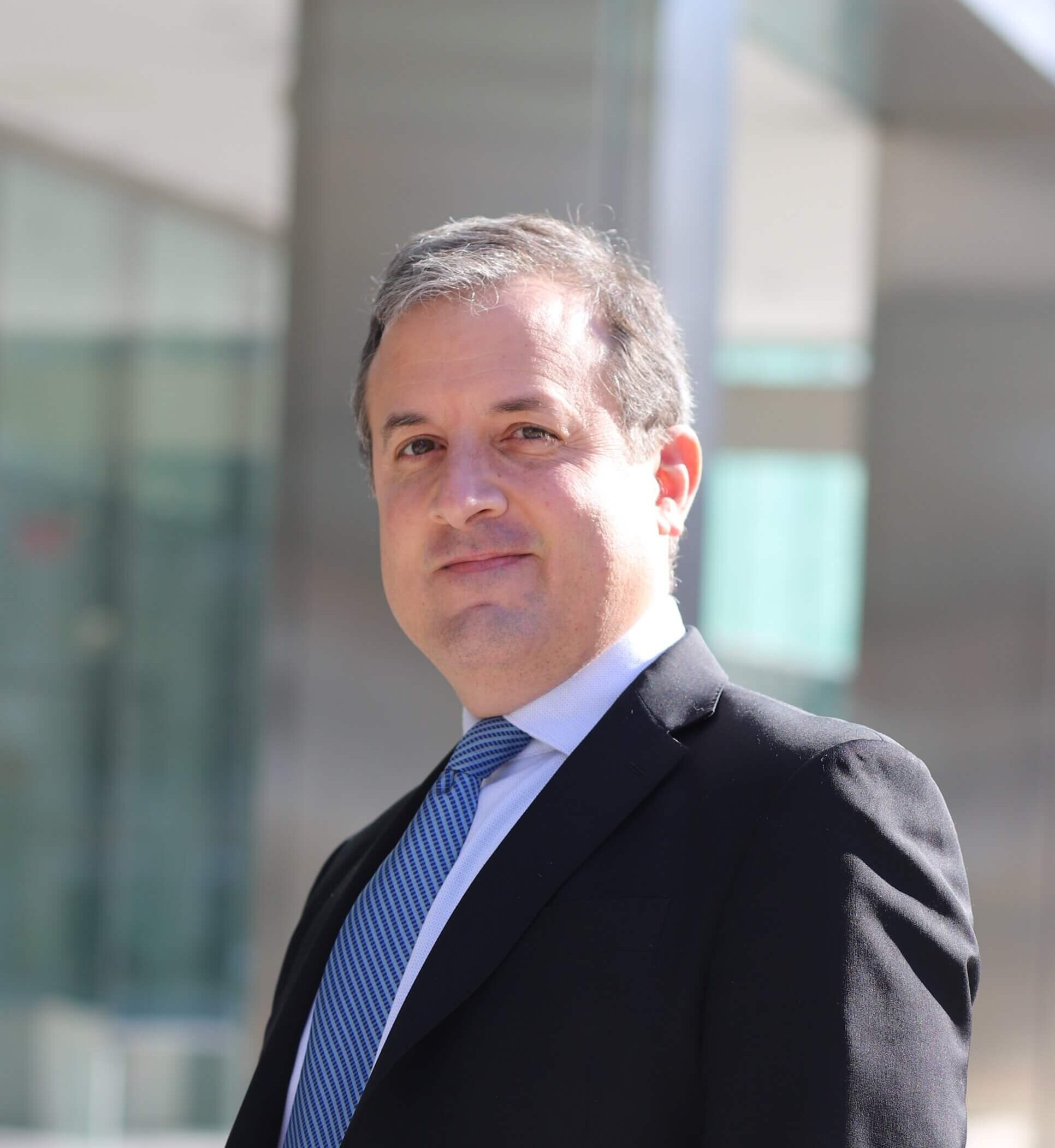
Dr. Richard Ponzio
Director and Senior Fellow of the Global Governance, Justice and Security Program at the Stimson Center
Watch Livestream Below:
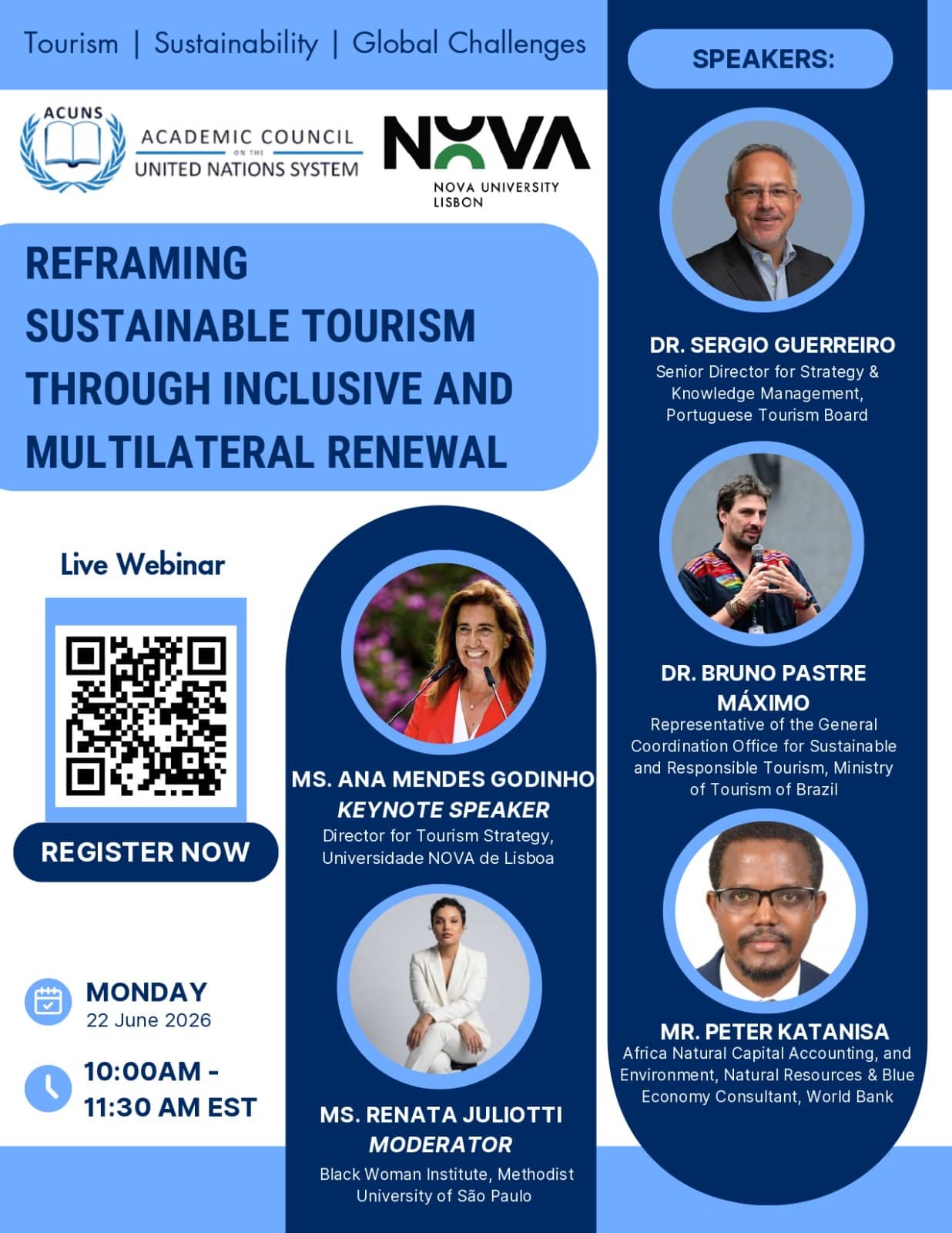
Tourism is a major global economic and cultural sector that enables the movement of people across borders for leisure, business, and cultural exchange, contributing to employment, development, and cross-cultural understanding. Sustainable tourism advances these dimensions by emphasizing a balance between economic benefits, environmental protection, and the preservation of cultural heritage, ensuring that tourism remains viable for future generations. Within the broader ambitions of the 2030 Agenda for Sustainable Development, tourism plays a cross-cutting role in advancing integrated economic, social, and environmental progress. As a sector that connects markets, ecosystems, and cultural systems, it has the potential to catalyse inclusive, equitable, and sustainable development, while fostering partnerships and promoting resilient and balanced development pathways locally and globally.
As the 69th UN Commission on Africa and the 20th UN Tourism/PATA Forum approach, the Academic Council on the United Nations System and NOVA University Lisbon are pleased to bring together policymakers, academics, and practitioners to identify emerging trends and explore collaborative frameworks. This webinar assesses how current approaches address climate impacts, cultural preservation, and equitable economic development, and it showcases examples of effective implementation of sustainable tourism across local, national, and global levels.
Moderators:
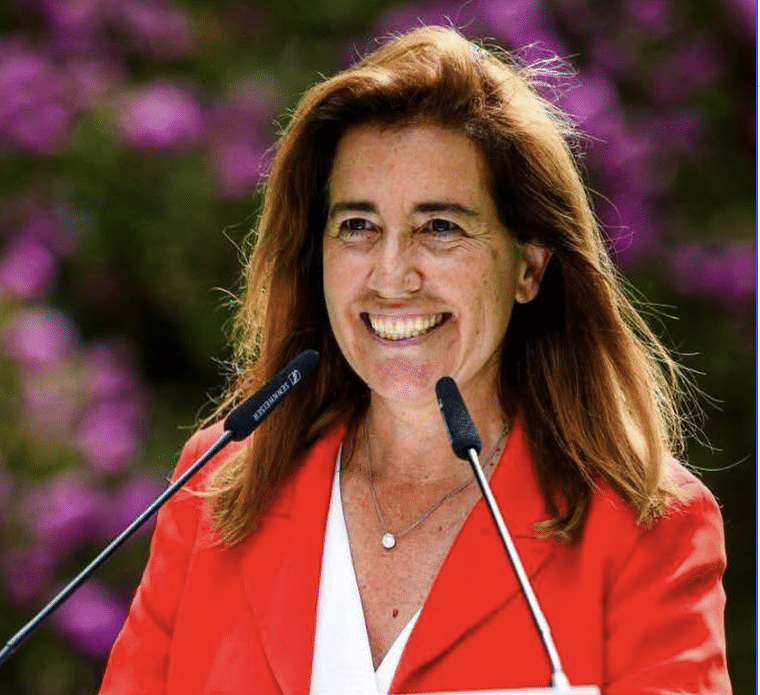
MS. ANA MENDES GODINHO
Director for Tourism Strategy, Universidade NOVA de Lisboa

MS. RENATA JULIOTTI
Black Woman Institute, Methodist University of São Paulo
Speakers:
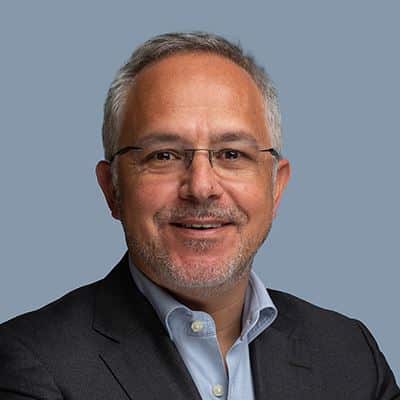
DR. SERGIO GUERREIRO
Senior Director for Strategy & Knowledge Management, Portuguese Tourism Board
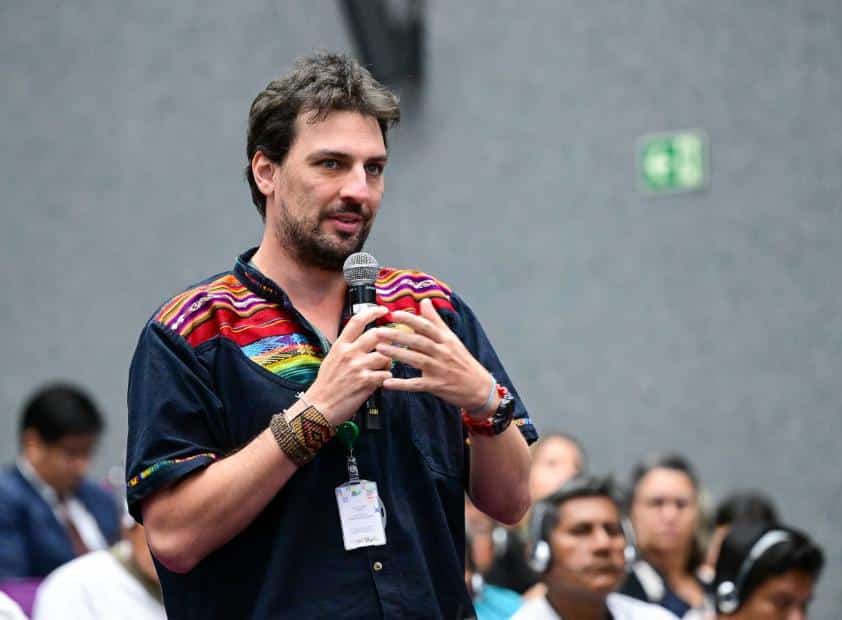
DR. BRUNO PASTRE MAXIMO
Representative of the General Coordination Office for Sustainable and Responsible Tourism, Ministry of Tourism of Brazil
MR. PETER KATANISA
Africa Natural Capital Accounting, and Environment, Natural Resources & Blue Economy Consultant, World Bank
See flyer below
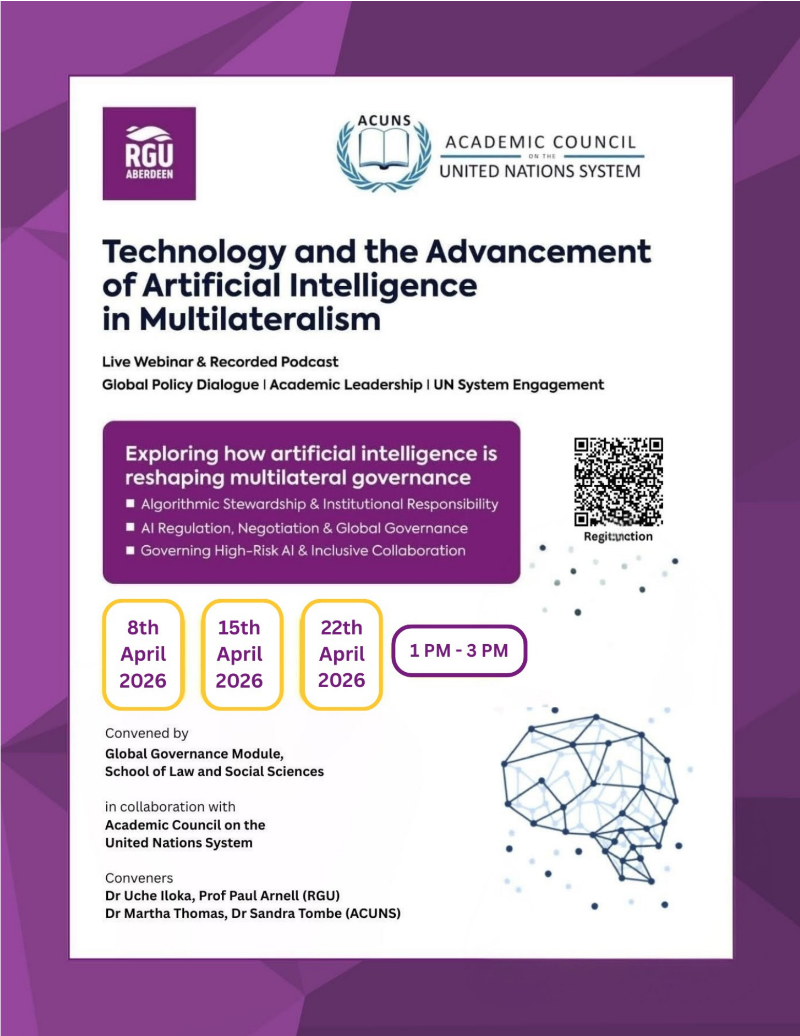
In this 3 part webinar and live podcast series, researchers and practitioners discussed how AI is reshaping global governance and the role of international institutions. They discussed AI and institutional responsibility, high risk AI and global collaboration, and AI regulation and the future of multilateral governance.
Follow along with the podcast below:
Moderators:
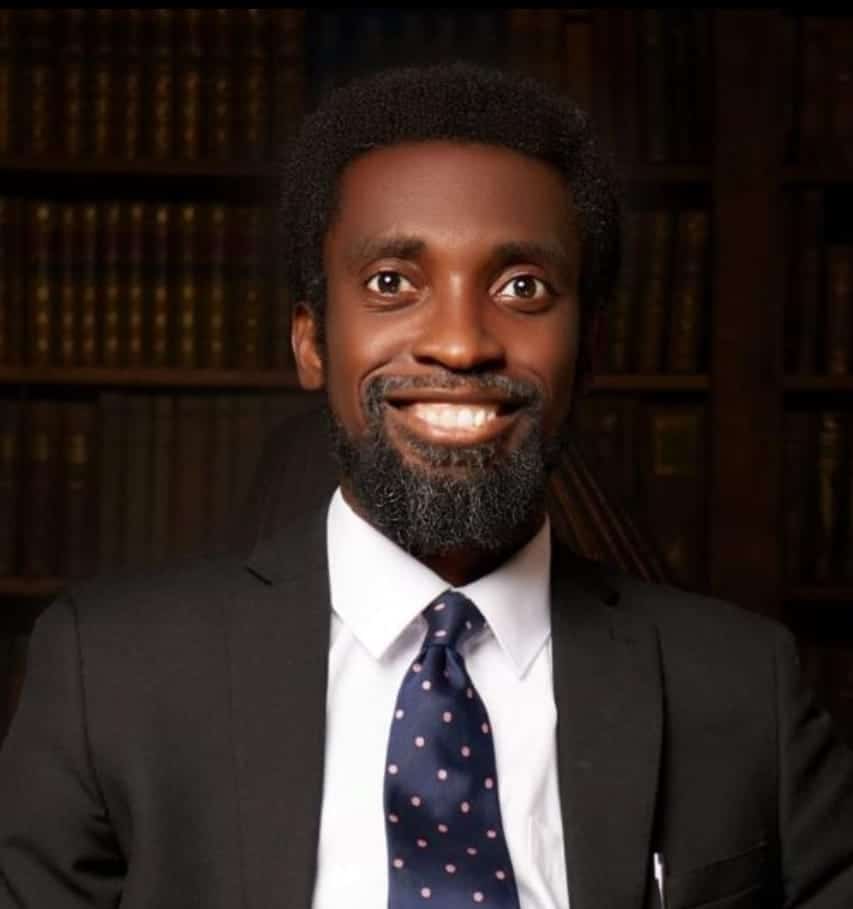
Dr. Uche Iloka
Senior Lecturer in Law and Research Degrees Coordinator at the School of Law and Social Sciences, Robert Gordon University

Professor Paul Arnell
Professor at the School of Law and Social Sciences, Robert Gordon University
Dr. Sandra Tombe
Executive Director of ACUNS

Dr. Martha Thomas
Former Executive Director of ACUNS
See Flyer Below:
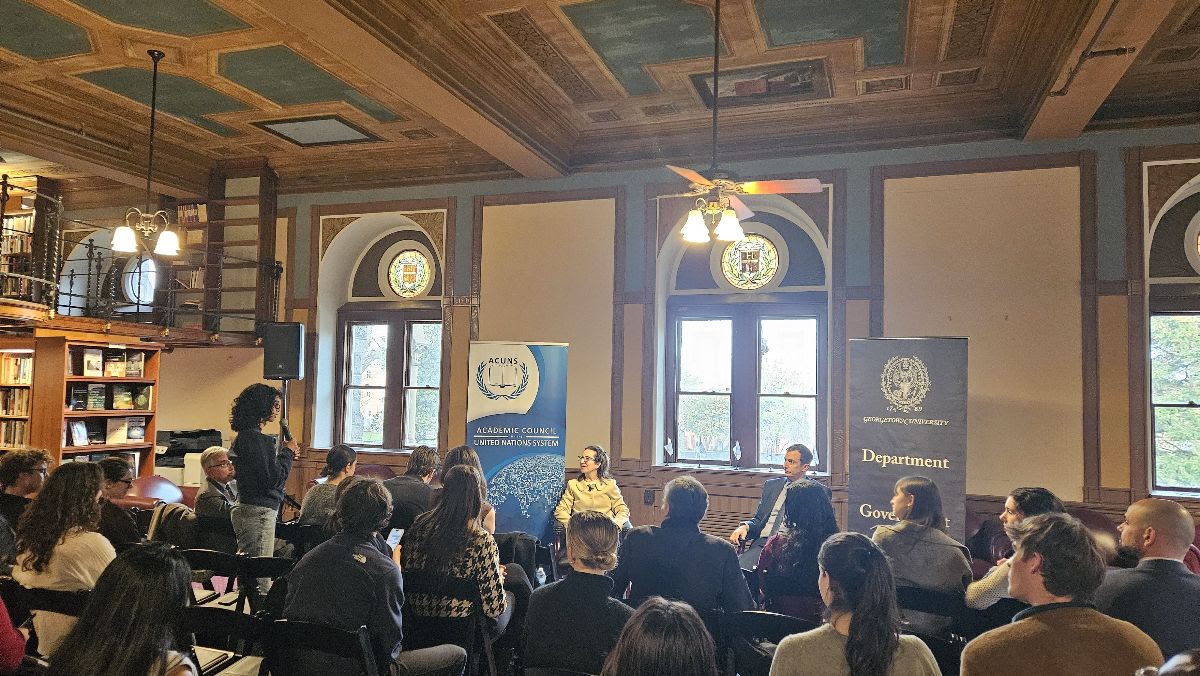
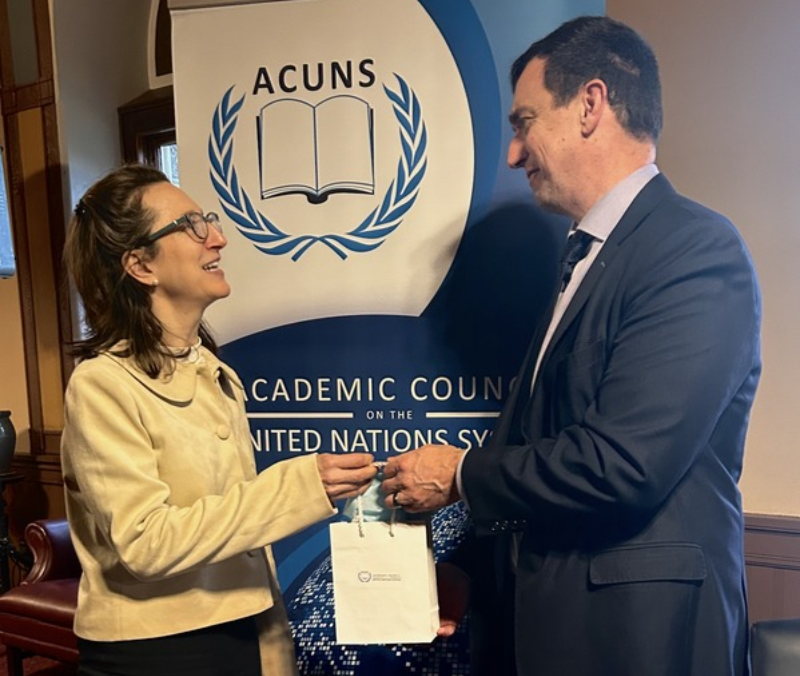
ACUNS Board Member & Georgetown professor Dr. Lise Howard moderated a discussion with Under-Secretary-General for Safety Gilles Michaud. The event was hosted in the Riggs Bioethics Library on Georgetown’s campus, and co-sponsored by ACUNS and the university’s Government department.
Speaker:
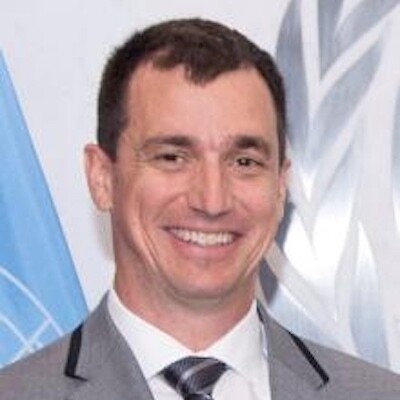
Gilles Michaud
United Nations Under-Secretary-General for Safety and Security
Moderator:
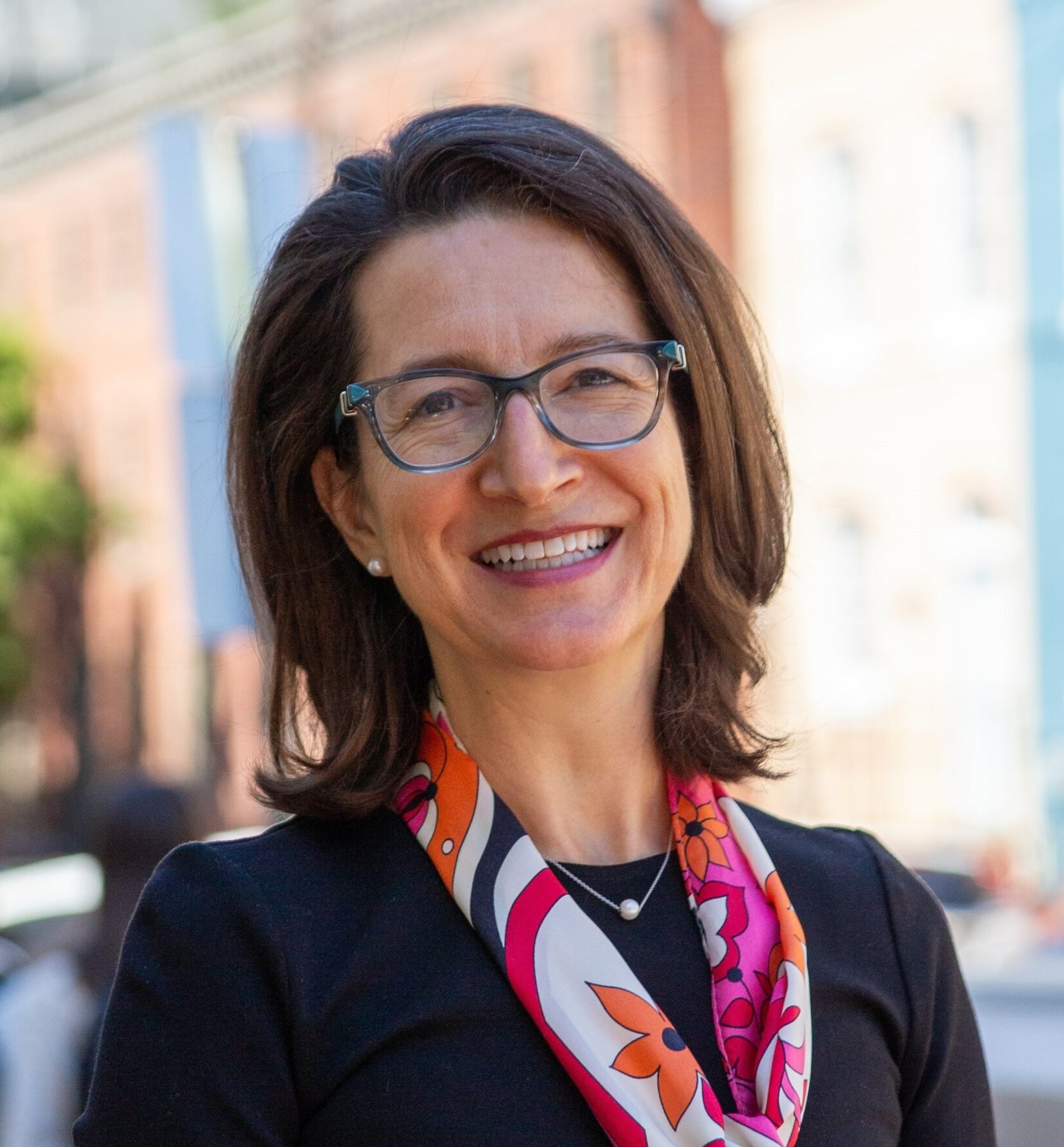
Dr. Lise Howard
Former ACUNS President and Professor of Government and Foreign Service at Georgetown University
Rector Tshilidzi Marwala spoke with Georgetown Professor Lise M. Howard on recent developments and challenges facing the UN system. The event took place on Thursday, 15 January, at Georgetown University’s Mortara Center, where ACUNS is housed. The event had seven co-sponsors at Georgetown, including ACUNS and the School of Foreign Service.
Dr. Marwala highlighted how multilateralism is under strain, as selective disengagement and “à la carte” participation risk weakening the collective nature of the UN—at a moment when global challenges demand shared responsibility and collective agency. He also emphasized the role of education as being as critical to peace and diplomacy and pointed to AI governance as an emerging global priority.
During the Q&A, students engaged on the environmental impact of AI, incentives for better technology, and the importance of responsible innovation.
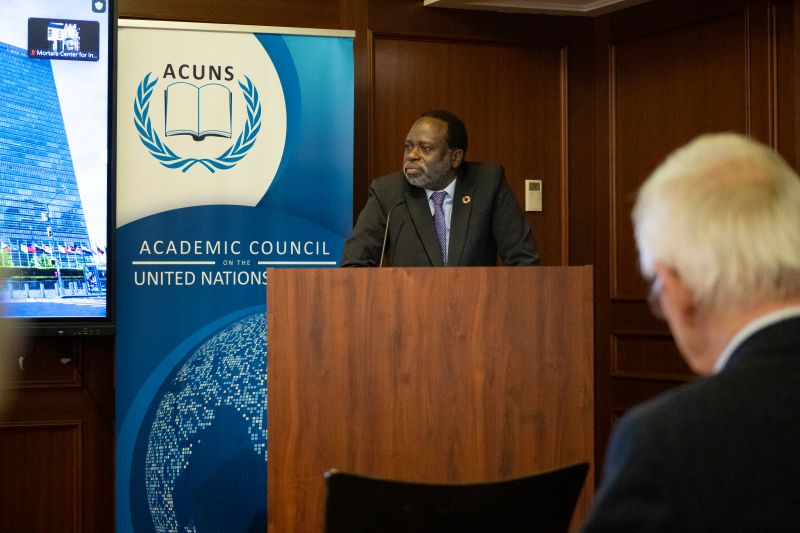
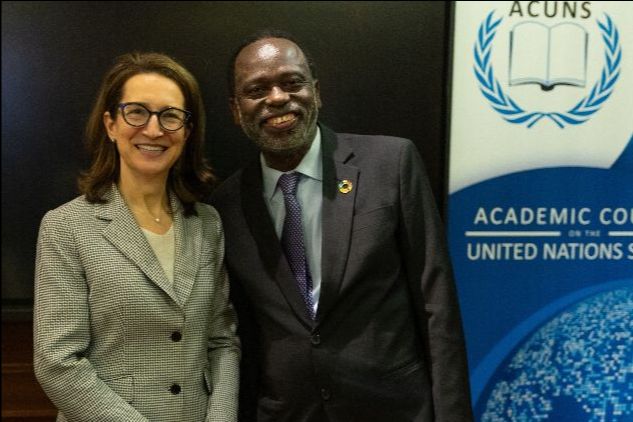
On Thursday, 15 January, Georgetown’s Mortara Center sponsored an “In the News Series” event on the future of global climate action following the landmark COP30 conference in Brazil (Nov 10 – Nov 21, 2025). Moderated by Mortara Director Erik Voeten and supported by ACUNS, the panel discussion featured Prof. Joanna Lewis and Sir Andrew Steer as they discussed the question “What’s Next for Climate Change?”
Last Updated: Sunday, 27 September 2026